Interview with Howard Rontal - Myofascial Release Massage
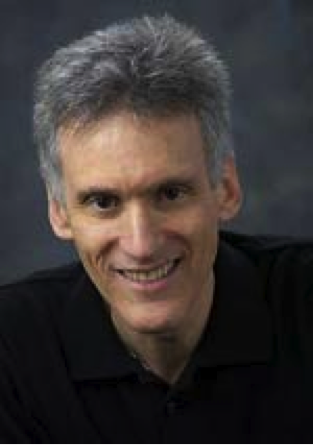
On Saturday, September 30, 2017, I interviewed Howard Rontal (seen in adjacent photo), the founder of Myofascial Release Massage. Howard Rontal will be in Dearborn, available for private sessions, on Monday, October 30 to Friday, November 3, 2017. His fees are $100 for the hour session. Howard is masterful at diagnosing particularly difficult cases.
Sandra: What inspired you to make a career in this field?
Howard: My first career was as a journalist. I had a crisis of consciousness in which I realized that I couldn’t keep doing it and had to find something else. While I sorted through my options, I took a job as the secretary to Joseph Heller, a structural integration practitioner (aka Rolfing) and the founder of a school that taught a derivative of Rolfing. He called his work “Hellerwork.” Within a year of starting to work for him, I was in his training. I discovered how much I wanted to help people directly and Hellerwork seemed the perfect vehicle for that. I also discovered that I had an almost preexisting understanding of how it worked and how to do it which gave me confidence that I would be successful at it.
Sandra: How does Myofascial Release Massage differ from regular massage?
Howard: In the Myofascial Release Massage we work on fascial tissue, that white membrane you see when you pull the skin off a piece of chicken. That membrane, in a young person, is soft, supple, slick, and elastic. As we grow older, for reasons of physical trauma, emotional trauma, habits of movement, disease (the inflammatory process), and the desiccation of tissue as we age, fascial tissue becomes hard, rigid, short, and adhesive – it literally becomes gluey. What you notice when this happens is that you are stiffer and often in pain. The white membrane can itself be manipulated. While what I do seems to look like massage, in fact, what I’m effecting is fascial tissue, making it softer, more elastic and flexible. What clients notice is that they have significantly less (or no) chronic and acute stress, tension, and pain and an increase in range and ease of motion.
Sandra: Can you share a result of your work that surprised or impressed you the most?
Howard: Oh boy, after 32 years there have been a lot of amazing results. I’ll give you two, one from the beginning of my practice and one very recent. Early in my practice, a client found me who suffered terrible back pain after surgery. He underwent the surgery, which removed seven transverse (bony) processes on the right side of his spine, but that left him in as much pain as before. At the time all I knew how to do was the Hellerwork series and by its end, he was generally pain free and very grateful. I can’t claim I know what I did that worked so well but it did give me the understanding that this work could be very useful in the relief of pain.
Within in the last year I worked on a fellow who suffered severe debilitating headaches and migraines attacks about twice a week. He’s now generally pain free, hasn’t had a migraine in some months, and gets about one mild to moderate headache about every two weeks which he can easily function through or medicate. He stated out seeing me twice a week and now he ‘s down to once every two to three weeks. Needless to say, he’s thrilled. For myself, after 32 years in the business, I do have a good idea of what to do to provide relief for headaches and migraines and lots of other musculo-skeletal problems.
Sandra: How many sessions does one need for relief of pain or correction of posture?
Howard: For postural correction I usually recommend the Hellerwork series because that’s what it’s designed to do. It’s a series of 11 sessions and after they end, clients sometimes come back for “tune-ups” to help them maintain the effects of the original work. For pain relief, I employ the Myofascial Release Massage, which is based on Hellerwork, but includes all the other modalities I’ve learned since my original training. It’s almost impossible to predict how many sessions it will take to relive pain but know that I don’t like to waste either your time or mine. If one doesn’t get results in three to four session, then I probably won’t be able to help you. Generally speaking, the pain is reduced gradually session to session. I’ve fixed a frozen shoulder in as little as one session, migraines may take many months of sessions but on a decreasing frequency.
Sandra: I heard of other practitioners doing fascial work. How is yours different?
Howard: It’s hard to answer this question because first I would have to know what these other practitioners are doing. But generally speaking, there two kinds of fascial release, mine, the Myofascial Release Massage and the John Barnes technique. Barnes practitioners employ a 90 second static stretching of specific fascial tissues to cause a low level electric current to amplify in the the musculature and when it does, the fascial tissue will relax and lengthen. In my work, we apply direct pressure to the tissue which is why people think it looks like massage. Perhaps this is too technical, but in the Barnes technique, they lengthen one component of fascial tissue, amorphous ground substance, in mine, we stretch and soften collagen fibers and elastin.
Sandra: How does one choose a Myofascial Release Massage practitioner that is best suited for them?
Howard: A good, relevant, and very practical question. In the end, you should visit their website, read their testimonial letters, and then talk to them about your concerns. Most practitioners will be very truthful about what they think they can help and what they can’t. The next step would be to try out their services for a session or two. If you get helped, hallelujah, if not, then move on. Also, therapists who practice the Myofascial Release Massage may know other therapeutic modalities that will be of great use to you as well.
Sandra: I heard that you had other trainings that compliment the Myofascial Release Massage. In layman’s terms, what are they and how do they work?
Howard: This question requires a very long answer, probably more of an answer than your readers want to read or we have time to discuss. Suffice to say, that in addition to my original training in Hellerwork and many continuing education classes in that technique that I’ve taken since, I am also certified in the basic work of Erik Dalton and have taken many classes from Doug Nelson. Dalton’s work the Myoskeletal Alignment Technique, is a brilliant combination of Rolfing and classic osteopathic manipulation. I love it and use it daily (and am just about certified in his first level Advanced Class). Nelson’s work is Precision Neuromuscular Therapy. It’s excellent for learning Trigger Point Therapy (the work of Dr. Janet Travell, the doctor who successfully treated President John F. Kennedy for back pain) and for learning critical diagnostic thinking. I am also quite skilled in the manipulation of ligaments and for developing many therapeutic techniques that have proven very effective in helping my clients. All these together are what I call my practice of the Myofascial Release Massage. One of the things I really love about this work is the latitude it offers for creating new techniques and understandings how to manipulate the body. Taken all together, I am often able to help relieve my clients of chronic and acute stress, tension, and pain and increase their range and ease of motion – which is why I love this work.